Kitchen and Bathroom News │ Ren Baicheng: Willing to Be a Trend Leader, Not Afraid of Later Followers
26-08-15
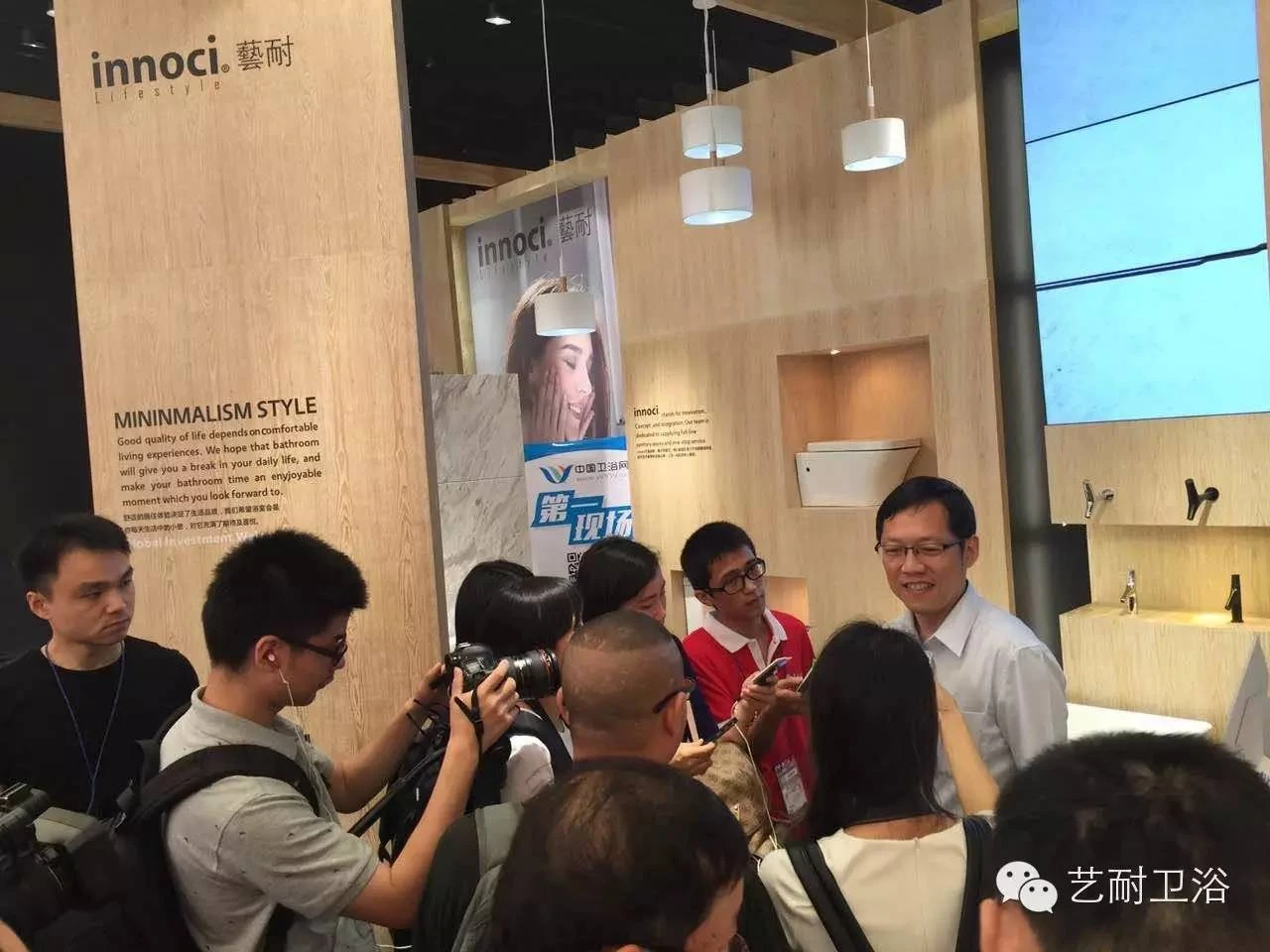
Kitchen & Bath News reports: Reporter Zhong Zijie covered that on June 3, the Shanghai Kitchen & Bath Expo officially opened. While exhibiting, Inax Sanitary Ware held its own new product launch, unveiling over 40 new products in one go. As a major international brand, Inax Sanitary Ware has always intended to enter the domestic market. Now, making a strong move at the expo, it has taken a significant step forward in the domestic market. At the expo, Kitchen & Bath News conducted an exclusive interview with Inax Sanitary Ware General Manager Ren Baicheng.
Innovative Design Concepts Lead the Trend
At Inax's new product launch, it was evident that Inax focuses more on the overall feeling and color coordination, bringing consumers a different experience. This brand-new overall style is very comfortable. Inax's design philosophy emphasizes global culture and is not limited to any particular region, but spreads to various places as it develops.
Regarding this year’s sanitary exhibition, Ren Baicheng noted that there have been many changes in the participating brands, with new manufacturers bringing more concepts and designs. This is a positive change for the current domestic sanitary industry. Inax cooperates with many European companies, and this year introduced many of the latest bathroom ideas that have gradually started to become popular in China, such as wet and dry separation, which has now become a concept that must be considered in domestic bathroom design. Inax focuses more on bathroom design, treating it as something to be appreciated and as a leisure space, guiding this trend of awareness. Ren Baicheng said, "Because our production scope is relatively broad, what we bring is the concept of an integrated home. You can see that almost everything in the bathroom we have it, and we have introduced many new bathroom designs that I think everyone can experience—whether it’s the way of storage or the way of showering, there are significant differences." This shows that Inax Sanitary Ware's design approach is not market-driven for performance, but adheres to a human-centric, conceptual, and detail-oriented artistic design route, as Ren Baicheng stated.
Inax Sanitary Ware aims to lead trends in the Chinese market. Domestic companies are all making smart products, often only considering technology-based intelligence, while Inax focuses on sensory experience based on human needs. It may seem unrelated to the current popularity of smart sanitary ware, because for Inax Sanitary Ware, they put full effort into visual experience and practicality, focusing on perfecting the details. Attention to details is key to doing better. Naturally, Inax’s future will also expand to smart sanitary ware and even to the entire smart home concept. At present, Inax is ready to act as a trendsetter.
Joining Hands with Dongpeng for a Powerful Alliance
Nowadays, it has become a trend for domestic and foreign brands to join forces. Since last year, Yinai and Dongpeng Sanitary Ware have become strategic partners. The strong alliance between Yinai and Dongpeng is truly complementary. Dongpeng is an influential sanitary ware company in China, a manufacturer with strong capabilities and historical heritage. This cooperation between the two was a win-win strategic decision reached after several years of negotiations. Dongpeng is also very eager to collaborate with major international brands, and Yinai hopes to leverage Dongpeng's influence and manufacturing strength in China to introduce many new ideas into the country. Ren Baicheng stated: "We don't want this to be an abstract concept; we want it to become part of everyone's daily life. Dongpeng helps us implement this idea. It is one of the few suppliers in China with comprehensive manufacturing capabilities, and I think this is a very good combination."
Dongpeng has sales outlets nationwide, which is very important for Yinai. By leveraging these outlets, Yinai can quickly enter the domestic market. This year marks the second year of cooperation between Yinai and Dongpeng, and Yinai is preparing to hold a formal investment promotion event at Dongpeng's outlets. This promotion not only collaborates with Dongpeng but also targets the domestic system. Participation from some cross-industry companies is also being considered. Nowadays, young salespeople and new companies in the building materials industry have innovative sales models and ideas, and they are open to new products and concepts. This aligns perfectly with Yinai's vision, making these companies and salespeople potential partners for Yinai.
This investment promotion plan is a key focus for Yinai in the domestic market this year. Through the channels within the group, the expectation for this year is to reach 300 outlets. However, Yinai hopes for a bigger breakthrough next year. Currently, Yinai has around ten to twenty pilot outlets, all performing very well. While gaining experience, they also aim to introduce new models. "How can we enable agents to profit, reduce intermediate costs, and promote such products to various projects and consumers in a more affordable and convenient way?" These are all considerations within Yinai.
A Development Path with Both Challenges and Opportunities
Regarding the outlook for this year’s building materials market, the question is probably the one most frequently asked to most companies this year. Ren Baicheng believes that, with the development of the industry, the market is indeed becoming increasingly challenging because more participants are entering and demand is decreasing. Therefore, a cooling market is to be expected. Consumers always hope to get the best products at the lowest price, especially the younger generation nowadays. No matter how long a company has a history or what kind of historical heritage it has, these are not reasons for purchase. "A company's product can speak for itself; the quality must be good, the design must be good, the price must be reasonable. If all three aspects are done well, it inevitably will not be affected by the market. This is something every company needs to consider," Ren Baicheng advises all companies.
Regarding the development of foreign and domestic markets, Ren Baicheng also revealed that there are still some differences between the two. Yinai’s products have different specifications overseas compared to domestic ones. For example, toilets in China are either direct-flush or siphon-flush, while abroad many are wall-mounted or direct-flush. These differences arise due to building structures, but cultural differences define the market and further influence the general direction of products. So, Yinai has started to intensify efforts to develop products more suitable for the domestic market, and some effort is still needed in promoting specifications. Ren Baicheng gave an example regarding the diverse storage in bathroom cabinets. This is currently a trend domestically. If Yinai wants to popularize the concept of such storage—this type of open metal-frame storage—it will invest more effort in design and resources to achieve a significant breakthrough.
Regarding Yinai's future market expectations, Ren Baicheng is quite optimistic and confident: "We have plans to enter the domestic market, so Yinai's planned growth is not just a simple 30% or 40%, but a massive increase that is difficult to measure. In the coming years, there will be no upper limit."
Regarding the imperfect domestic intellectual property protection, Ganyu Industrial Design's Yinai Sanitary Ware might be copied by many other companies, which could be a troublesome issue for Yinai, but Ren Baicheng has his own view: "Yinai Sanitary Ware will always be a leader in product innovation. We are not very concerned about imitators following behind. Yinai’s inherent quality and design capabilities always possess innovation. Even if imitated, those following behind cannot learn all the essence."